Is Bobbin Thread Different from Regular Thread? When It Matters
As an Amazon Associate we earn from qualifying purchases. Some links on this page are affiliate links, which means we may earn a small commission if you make a purchase.
Online tutorials often suggest 60wt or 80wt thread for bobbin use, with typical weights around 0.2-0.3 grams per kilometre. Domestic UK machines, however, have tension systems calibrated to handle the same thread weight in both top and bobbin positions — usually 40wt standard thread at approximately 0.5g/km. Using the wrong pairing can throw this balance off.
Many domestic machines are commonly used with the same thread weight in both positions, and your manual will likely confirm this approach for general work.
This article explains when bobbin and top thread can match, and when a lighter bobbin thread proves necessary. You’ll understand the mechanics behind the choice so you can sew with confidence.
Understanding Thread Types for Domestic Machines
Two thread categories matter most for home sewing:
Standard sewing thread is your everyday choice — typically 40wt, used for garment sewing, repairs, and seams. Brands like Gutermann (paid link)See on Amazon, Mettler, and Coats produce reliable standard thread that works well in both top and bobbin positions on domestic machines.
Fine embroidery thread serves a different purpose. These finer threads — 60wt, 80wt, or specialty weights — are marketed for bobbin use in embroidery to reduce bulk and stay invisible on fabric undersides. Mettler Bobbinette and Madeira’s bobbin range fall into this category.
The key difference lies in their jobs: standard thread builds seams while fine thread finishes decorative undersides. Choosing the wrong type for the task creates confusion and stitching problems.
Matching Thread Weights for Balanced Stitches
For most UK home sewing on cotton, polycotton or polyester fabrics, your bobbin thread does not need to differ from your top thread. The idea that bobbin thread must be lighter stems from industrial machine practices that don’t apply to domestic models.
Domestic lockstitch machines operate with similar thread paths and tension ranges for both top and bobbin threads. Bobbin tension is affected by thread type, weight, machine settings, and bobbin-case adjustment. When you pair the same weight thread top and bottom, the system typically balances well — which is why many machines arrive from the factory set up this way.
Changing thread weight can alter tension and may require testing or adjustment. If you switch to a lighter bobbin thread while keeping the top thread at normal tension, the bobbin side might be overwhelmed, causing loops underneath the fabric — the familiar “bird’s nest” effect.
There are exceptions. Machine embroidery on Brother PE series or similar machines, or work with delicate fabrics like silk or chiffon, may benefit from fine-weight bobbin thread (60wt or 80wt). For embroidery, Madeira suggests aiming for roughly one-third bobbin thread to two-thirds top thread visible on the underside — a target commonly checked visually, with tension adjusted for the machine, design, and fabric.
The practical approach remains straightforward:
- General sewing, garment making, repairs: same thread weight top and bobbin — usually 40wt standard thread.
- Machine embroidery on fine or pucker-prone fabric: fine-weight bobbin thread — follow your machine and thread manufacturer’s specifications.
It is possible to use regular sewing thread in an embroidery machine bobbin, but standard thread often causes problems like bulk on the underside, puckering on fine fabrics, and difficulty achieving balanced tension. Embroidery-specific fine threads (60wt, 80wt) are designed to sit cleanly on the reverse of decorative stitching. Standard sewing thread for domestic use is typically 40wt, though you’ll also see 50wt and 42wt from some manufacturers. It’s not marketed as “bobbin thread” because it functions well in both positions on standard domestic machines. If your bobbin thread keeps breaking, one possible cause is an unsuitable thread combination; also check threading, needle, bobbin insertion, damage, lint, and tension. A different thread weight can change the effective tension and may contribute to breakage.
Situations Where Fine Bobbin Thread Works Best
Fine-weight bobbin thread proves useful in several specific scenarios where it may reduce bulk in embroidery applications.
📺 Watch: Singer Heavy Duty 4423 4 Threading & Winding a Bobbin
Reducing bulk on stitching undersides. Dense embroidery — satin stitch, filled motifs, monograms — accumulates thread quickly on the fabric reverse. A 60wt or 80wt fine thread takes up less space than 40wt, creating a flatter, more professional finish.
Achieving visible tension balance. For decorative work where the underside shows, the target is approximately one-third bobbin thread to two-thirds top thread visible. Fine bobbin thread can help achieve this appearance.
Working with delicate fabrics. Fine threads may help prevent puckering on lightweight materials like silk, cotton lawn, or sheer synthetics where heavier thread could pull the fabric.
Reputable UK options include Mettler Bobbinette, Brother embroidery bobbin thread, Gutermann’s bobbin range, and Madeira’s underthread products (paid link)See on Amazon (that one is a 1500m polyester spool). If you notice bulk, puckering, or uneven stitches during embroidery, checking your bobbin thread weight is a sensible first step before adjusting tension.
Choosing Thread for Your Project
Follow this four-step process to select the right thread combination.
Step 1: Identify your project type Garment seams, hems, repairs, or general construction work require standard thread. Machine embroidery — decorative stitches, monograms, filled designs — enters embroidery thread territory.
Step 2: Consider your fabric Cotton, denim, and polycotton work well with standard thread in both positions. For delicate fabrics like silk, chiffon, or sheer lawn where you can see your hand through the material, fine bobbin thread may be beneficial regardless of stitch type.
Step 3: Apply the basic guideline General sewing on everyday fabric: same thread top and bobbin. Machine embroidery: use the bobbin thread weight specified by your machine and thread manufacturer; common embroidery options include 60wt, 80wt, and 90wt. Fine fabric with any stitch type: consider fine-weight bobbin thread.
Step 4: Consult your manual Your machine’s manual reflects its specific calibration — follow any bobbin thread weight recommendations it provides.
Thread Selection Guide for Home Sewing
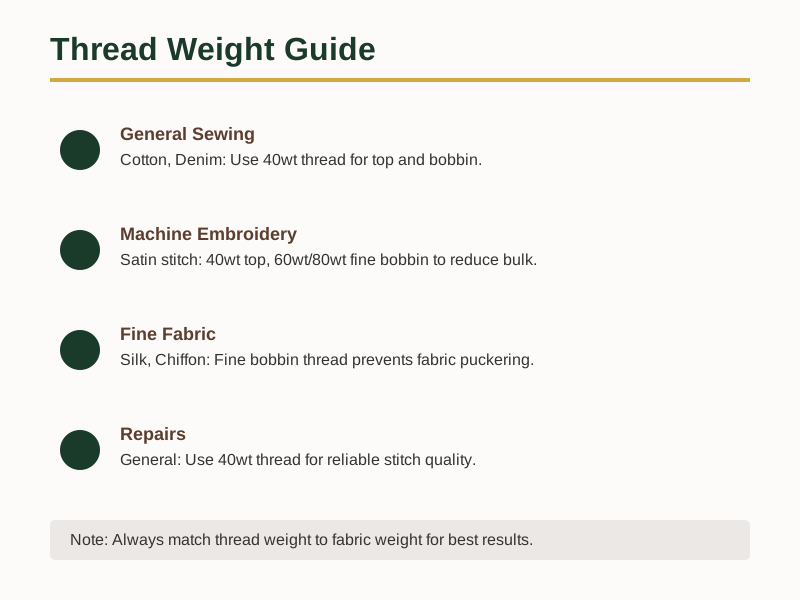
| Project Type | Fabric | Top Thread | Bobbin Thread | Reason |
|---|---|---|---|---|
| General Sewing | Cotton, Denim, Polycotton | 40wt Standard | 40wt Standard | Balanced tension, no bulk |
| Machine Embroidery | Satin stitch, Monogram | 40wt Standard | Fine weight (60wt-90wt) | Reduces bulk, helps tension balance |
| Fine Fabric | Silk, Chiffon, Sheer Lawn | 40wt Standard | Fine weight (60wt-90wt) | May prevent puckering, less visible |
| Repairs | Any | 40wt Standard | 40wt Standard | Reliable stitch quality |
📺 Watch: Sewing Machine Thread Tension - Updated
Next Steps for Perfect Stitches
For most home sewing, you don’t need special bobbin thread. Using the same weight in both positions, maintaining a clean machine, and reserving fine embroidery bobbin thread for actual embroidery or delicate fabric will serve you well.
If you’re experiencing tension problems and suspect a thread mismatch, trying the same weight in both positions is an inexpensive test that rules out one common cause of looping.
When thread choice isn’t the issue but tension problems continue, our How to Thread a Sewing Machine: Top-Loading vs Front-Loading Bobbins guide covers the complete threading system — positioning thread selection as one variable in achieving balanced stitches.
Download the Free Sew and Fix Fault-Finding Checklist for a systematic approach to troubleshooting stitching issues.
Sources & Further Reading
- Machine Embroidery Bobbin Thread - Sew Essential
- Embroidery Bobbins and Underthread | Madeira UK
- Bobbin Thread — jaycotts.co.uk - Sewing Supplies
Note: General guidance only, verify details with a qualified professional or official source.